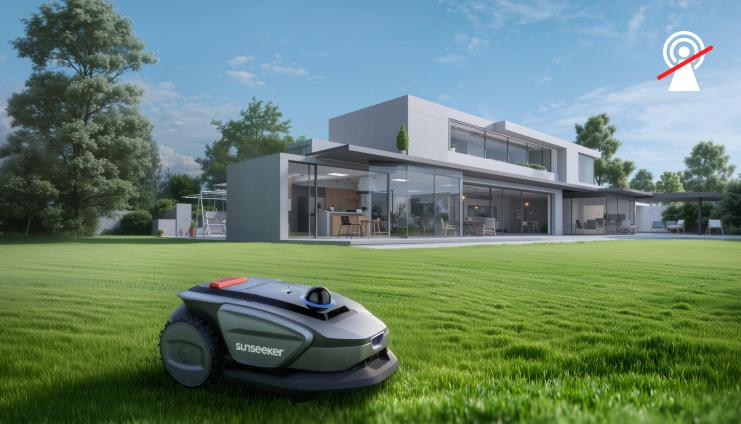
A robot lawn mower without perimeter wire works best in yards where satellite signals stay strong, mowing zones are easy to define digitally, and the terrain supports consistent navigation. These models replace buried boundary wire with virtual mapping, RTK positioning, onboard sensors, and app-based zone control. That makes them especially useful for homeowners who want easier setup, cleaner lawn edges, and simpler adjustments over time. The best results usually come from properties with open sky, manageable slopes, and layouts that let the mower travel efficiently between sections. Understanding how lawn size, obstacles, and terrain affect performance helps homeowners decide whether a perimeter-free robot mower matches their yard.
What Types of Yards Are Best for Perimeter-Free Robot Mowers?
Open Lawns With Clear Satellite Visibility and Minimal Obstructions
Open lawns are the strongest match for robot mowers without perimeter wire because these machines rely on stable satellite positioning and unobstructed movement. Yards with broad grassy areas, limited tree cover, and few tall structures allow the mower to maintain accurate virtual boundaries and mow in a more efficient pattern. Properties with clear sightlines also reduce the chance of navigation drift or repeated corrections. Flat or gently rolling lawns are especially well suited because the mower can travel smoothly and cover more area in less time. Homeowners with simple front and back lawn layouts often see the easiest installation process, since creating zones, no-go areas, and mowing routes through the app is straightforward and reliable.
Medium to Large Properties That Benefit From Virtual Boundary Technology
Medium to large properties are often ideal because virtual boundary technology simplifies setup across wider areas where installing physical wire would take more time and effort. Instead of trenching or staking cable around long lawn edges, homeowners can map mowing areas digitally and update them whenever landscaping changes. This flexibility is especially valuable on expansive lots with detached sections, side yards, or wide frontages. A perimeter-free mower designed for larger coverage can handle these spaces efficiently when signal conditions are good. Features such as app-controlled zoning, scheduled mowing, RTK navigation, and systematic cutting paths help maintain even results. For homeowners managing substantial lawns, wire-free operation offers convenience, precision, and easier long-term lawn planning.
Multi-Zone Yards That Require Flexible and Customizable Mowing Areas
Multi-zone yards are another excellent fit because wire-free robot mowers let homeowners define separate mowing areas without physically rewiring the property. That matters when a yard includes a front lawn, backyard, side strip, and additional grass sections around patios or garden beds. Using virtual boundaries, users can assign custom schedules, adjust cutting priorities, and create no-go zones for seasonal features or newly planted areas. This makes the mower easier to adapt as the landscape changes. Yards with distinct zones connected by clear travel corridors usually perform best, since the mower can move between sections with fewer interruptions. For properties with evolving layouts, perimeter-free technology offers a practical and highly controllable mowing solution.
How Do Yard Conditions Affect Wire-Free Robot Mower Performance?
The Impact of Trees, Buildings, and Signal Interference on Navigation
Trees, buildings, fences, and other vertical structures can reduce navigation accuracy by blocking satellite signals or creating interference in key parts of the yard. Heavy tree canopy is one of the most common challenges because it limits sky visibility and can affect how precisely the mower tracks virtual boundaries. Tall homes, garages, sheds, and walls may also create weak areas where positioning becomes less stable. In these conditions, the mower may slow down, recalculate, or require more careful zone setup. Yards with only occasional trees or structures usually remain manageable, especially when open lawn sections still provide strong coverage. The best performance comes from properties where most mowing areas have consistent access to open sky and limited signal disruption.
Managing Slopes, Uneven Terrain, and Complex Lawn Layouts
Terrain plays a major role in how smoothly a perimeter-free robot mower can move, turn, and maintain cutting consistency. Gentle slopes and even ground are ideal because they support stable traction and predictable navigation. Steeper inclines, dips, ruts, or bumpy surfaces can slow the mower, increase wheel slip, and reduce mowing efficiency, particularly in wet conditions. Complex layouts also add difficulty when the lawn includes sharp corners, islands of grass, or disconnected patches that require frequent route adjustments. Homeowners should check a mower’s slope rating before buying and compare it with the steepest part of the yard. Lawns with moderate grades and reasonably clear travel paths typically deliver the most dependable wire-free mowing results and fewer interruptions.
How Obstacles, Garden Features, and Narrow Passages Influence Efficiency
Obstacles affect how efficiently a wire-free robot mower can cover the lawn, especially when the yard includes frequent interruptions. Garden beds, play equipment, decorative stones, low furniture, and exposed roots all create areas the mower must detect, avoid, or route around. A few well-spaced features are usually manageable, but obstacle-heavy lawns can reduce mowing speed and create more uncut edges. Narrow passages matter too. If connecting paths between zones are too tight, the mower may struggle to travel cleanly or consistently between sections. Yards perform best when pathways are clearly defined and obstacles are placed in ways that allow smooth navigation. The more open and accessible the lawn surface is, the more efficient and complete the mowing pattern becomes.
How Can Homeowners Determine if Their Yard Is a Good Fit?
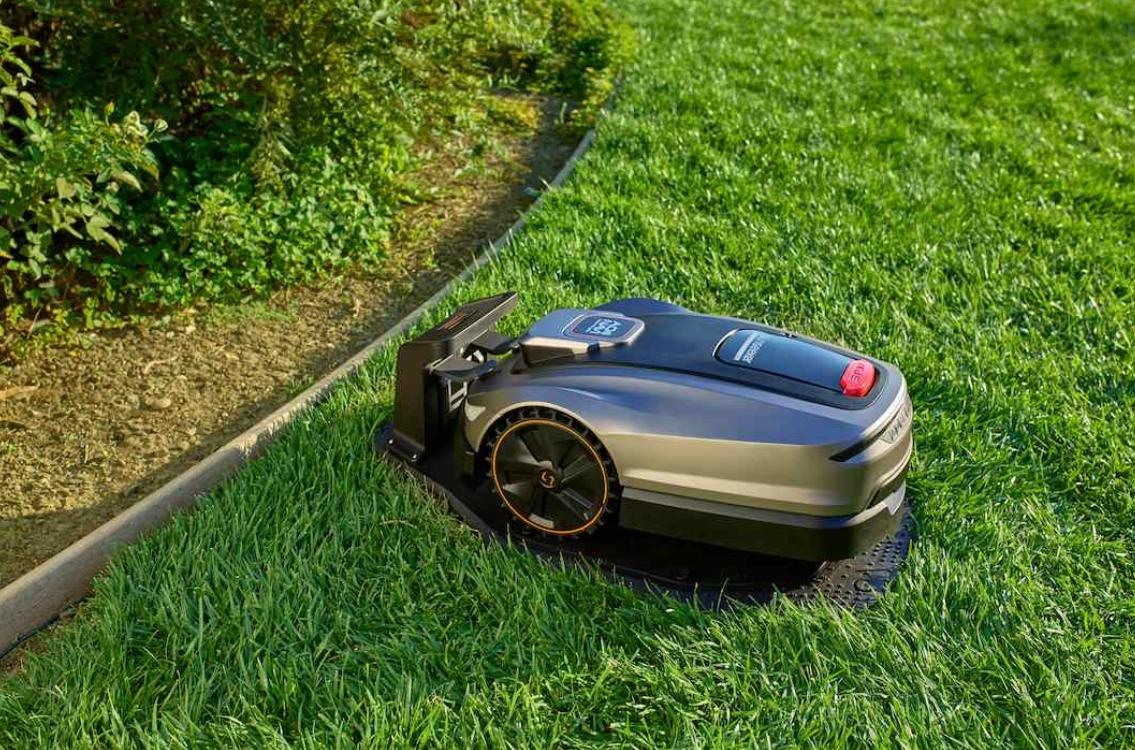
Homeowners can evaluate their yard by checking four core factors: sky visibility, lawn layout, terrain, and obstacle density. Start by walking the property and noting whether most grass areas have clear access to open sky rather than heavy tree cover or tall structures. Next, identify how many mowing zones the yard includes and whether those sections connect through wide, accessible paths. Then assess the ground itself by looking for steep slopes, deep ruts, uneven patches, or drainage issues that could affect traction. Finally, count fixed obstacles such as beds, furniture, play sets, or tight corners that may interrupt efficient mowing. If the yard is mostly open, moderately shaped, and easy to map digitally, a robot mower without perimeter wire is usually a strong practical fit.
Conclusion
The best yards for robot mowers without perimeter wire are open, well-structured lawns with clear satellite visibility, manageable terrain, and enough space for efficient navigation. Medium to large properties and multi-zone layouts often benefit most because virtual boundaries make setup and future changes far easier than physical wire installation. Performance drops in areas with dense tree cover, tight passages, steep grades, or many obstacles, but many yards still work well when most mowing space remains open and accessible. Homeowners who assess sky exposure, layout, slopes, and obstacles before buying can make a confident decision and choose a perimeter-free mower that fits their property and mowing routine.