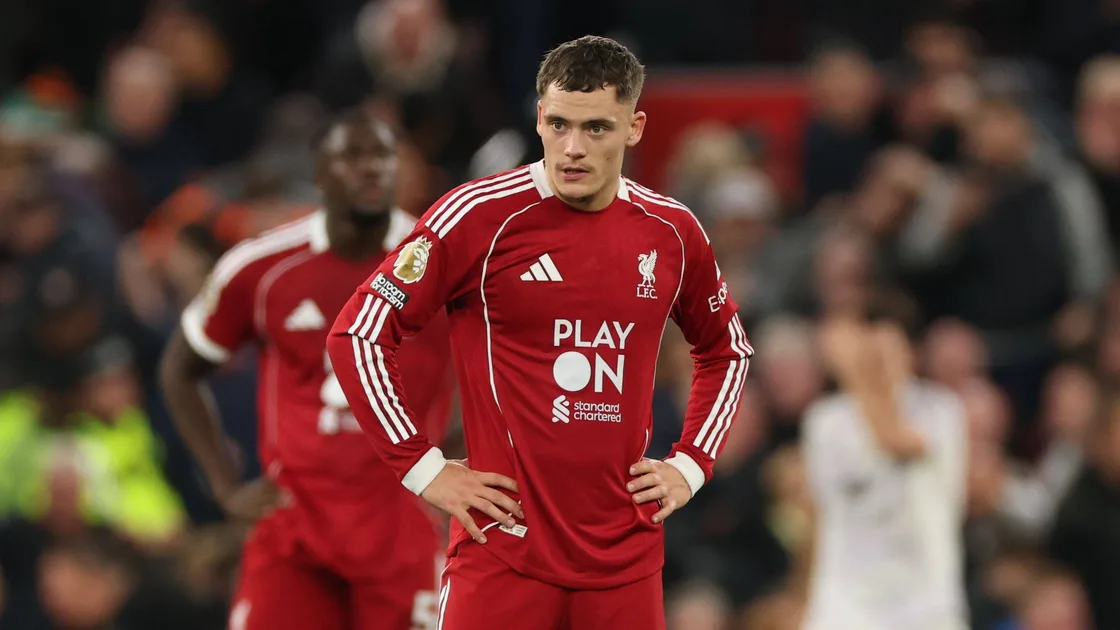
From Bundesliga Sensation to Liverpool Midfielder: The Florian Wirtz Story
A Transfer That Changed Two Leagues at Once
Few signings in recent Premier League history carried the weight that Florian Wirtz’s move to Liverpool did. It wasn’t just a club spending big on a promising young playmaker — it was English football reaching directly into the Bundesliga’s engine room and pulling out the player most people considered Germany’s next genuine superstar. Betting and analytics platforms such as dbbet uz have followed Wirtz’s numbers with real attention since the move, treating his early Liverpool performances less as isolated match ratings and more as an ongoing test of whether a Bundesliga wonderkid can actually translate his game to the Premier League’s pace. For Liverpool, and for Wirtz himself, that test is still very much in progress.
Not many transfers get billed as era-defining before a ball has even been kicked. Wirtz’s did.
The Making of a Bundesliga Star
Wirtz didn’t arrive out of nowhere. He came up through 1. FC Köln’s academy before Bayer Leverkusen picked him up in 2020, and from there the story moved fast — genuinely fast. He made his Bundesliga debut at seventeen, became the youngest scorer in the league’s history not long after, and then, in the 2023–24 season, helped power Leverkusen to an unbeaten domestic double while collecting the Bundesliga Player of the Season award along the way. Eighteen goals and a stack of assists in 49 appearances, for a team that simply didn’t lose. That’s not a normal season for a 20-year-old.
What made Wirtz stand out wasn’t just end product, either. It was the way he found space between opposition lines that most players his age couldn’t even see, let alone exploit. Scouts had been circling him since his early teens; by the time he tore his ACL in 2022, clubs across Europe were already treating his eventual recovery as a countdown to a bidding war.
The Florian Wirtz Liverpool Transfer: How It Actually Happened
That bidding war arrived in the summer of 2025, and it wasn’t close to a formality. Liverpool beat out serious competition — Bayern Munich among them — to sign Wirtz from Leverkusen for a fee that ended up around £116 million once add-ons were included, briefly making him the most expensive transfer in British football history. He put pen to paper on a five-year deal, reportedly turning down Bayern weeks after Liverpool had just lifted the Premier League title, which tells you something about how the club sold the move to him. Arne Slot made it clear early on that the entire attacking setup would be built around Wirtz as the No.10, and that promise, along with the presence of his former Leverkusen teammate Jeremie Frimpong already at Anfield, seems to have tipped things in Liverpool’s favor over Real Madrid and Manchester City.
“I’m really excited to have a new adventure in front of me,” Wirtz said at the time, explaining that leaving the Bundesliga for something completely new was a big part of his thinking. Big words for a 22-year-old walking into arguably the most physically demanding league on the planet.
An Adjustment Period Nobody Saw Coming
Here’s the part of the story that didn’t go according to script. Wirtz’s opening months at Liverpool were rough — genuinely rough, not just a slow start by superstar standards. Between late September and November, the Reds lost nine of twelve matches, and Wirtz found himself at the center of a lot of uncomfortable questions about whether the record fee had been a mistake. Through the winter, his output stayed thin: a handful of goals and assists across the Premier League, nowhere close to what £116 million typically buys.
Wirtz himself has been fairly candid about why. He’s said openly that the English game caught him off guard — not the physicality, which he expected, but how little time he actually gets on the ball compared to the Bundesliga. That’s not a small adjustment for a player whose entire game is built around finding that half-second of space other players don’t see.
Former Bayer Leverkusen teammate Robert Andrich has talked about steering Wirtz away from Bayern and toward Liverpool in the first place, and he’s also downplayed the panic around the slow start, pointing out that Wirtz has the kind of settled family environment around him that makes a tough transition easier to absorb than it might look from the outside. Liverpool icon Didi Hamann was blunter about it, telling BetGoat that a player in Wirtz’s position needs to be closer to double-figure goal returns, and that the assist numbers alone weren’t going to be enough to justify the price tag.
Turning the Corner
By spring, the picture had started to shift. Wirtz began scoring in bunches — against Wolves, Fulham, and Barnsley in the FA Cup among them — and started setting up teammates like Hugo Ekitike and Alexander Isak on a more regular basis. By March, he’d reached six goals and nine assists across all competitions, numbers that, while still short of the ceiling expected of him, at least pointed in the right direction after such a bruising start.
Reports at winwin and elsewhere throughout the winter suggested Liverpool had zero intention of cashing in on Wirtz despite the noise, with insiders describing him as essentially untouchable in any transfer window and central to the club’s long-term project — Ballon d’Or potential and all, according to people inside the building. Real Madrid’s continued interest, which has surfaced repeatedly since Wirtz arrived at Anfield, was reportedly never close to tempting Liverpool into a sale, even when his form was at its most inconsistent.
Building a Team Around a Single Talent
Slot’s decision to build the Liverpool attack specifically around Wirtz as a No.10 says a lot about how the club views him — not as one piece among many, but as the player everything else is meant to funnel through. That’s a significant bet for any manager to make, and it’s part of why Wirtz’s early struggles generated so much attention: when a team’s entire attacking identity is wired around one player, that player’s form becomes the team’s form in a way that’s hard to hide.
It also explains why Liverpool stayed patient through a genuinely difficult first half-season rather than reaching for a quick fix. Wirtz’s versatility — he’s played across the front line at various points, from attacking midfield to either wing to even centre-forward — gives Slot options, but the club’s public and private messaging has consistently pointed toward keeping him as the creative fulcrum long-term, not shuffling him around to paper over a slow adaptation.
Why the Wirtz Story Still Matters
Not every big-money signing gets judged fairly in year one, and Wirtz’s case is a useful reminder of that. A player who dominated the Bundesliga at a rate few others his age ever have doesn’t automatically walk into the Premier League and repeat the trick immediately — the league’s pace, physicality, and reduced time on the ball are real adjustments, not clichés pulled out for a slow start. What’s happened since suggests Wirtz is finding his footing rather than being exposed as an expensive mistake.
Germany’s national team setup has continued to trust him too, with his involvement at the international level throughout this period reinforcing the view that his early Liverpool numbers were more about adaptation than ability.
Conclusion: A Story Still Being Written
Florian Wirtz’s move from Leverkusen to Liverpool was never going to be judged fairly after a handful of matches, however tempting that was for critics during the club’s rough autumn. His story so far is one of genuine talent meeting genuine adversity — a Bundesliga wonderkid discovering that even the best players need time to rebuild their game inside a new league’s rhythm. Whether he eventually becomes the Ballon d’Or-level force some inside Anfield already believe he can be, or simply a very good Premier League midfielder who took a season to find his level, the next chapters of the Florian Wirtz story will be written the same place his most difficult ones were: on Merseyside, under exactly the kind of scrutiny that comes with being the most expensive player in your club’s history.