Quick Summary
- Equipment failures rarely happen out of nowhere.
- Most equipment doesn’t fail without warning. In many cases, the warning signs show up much earlier, often in the form of unusual heat that people simply can’t see during routine inspections.
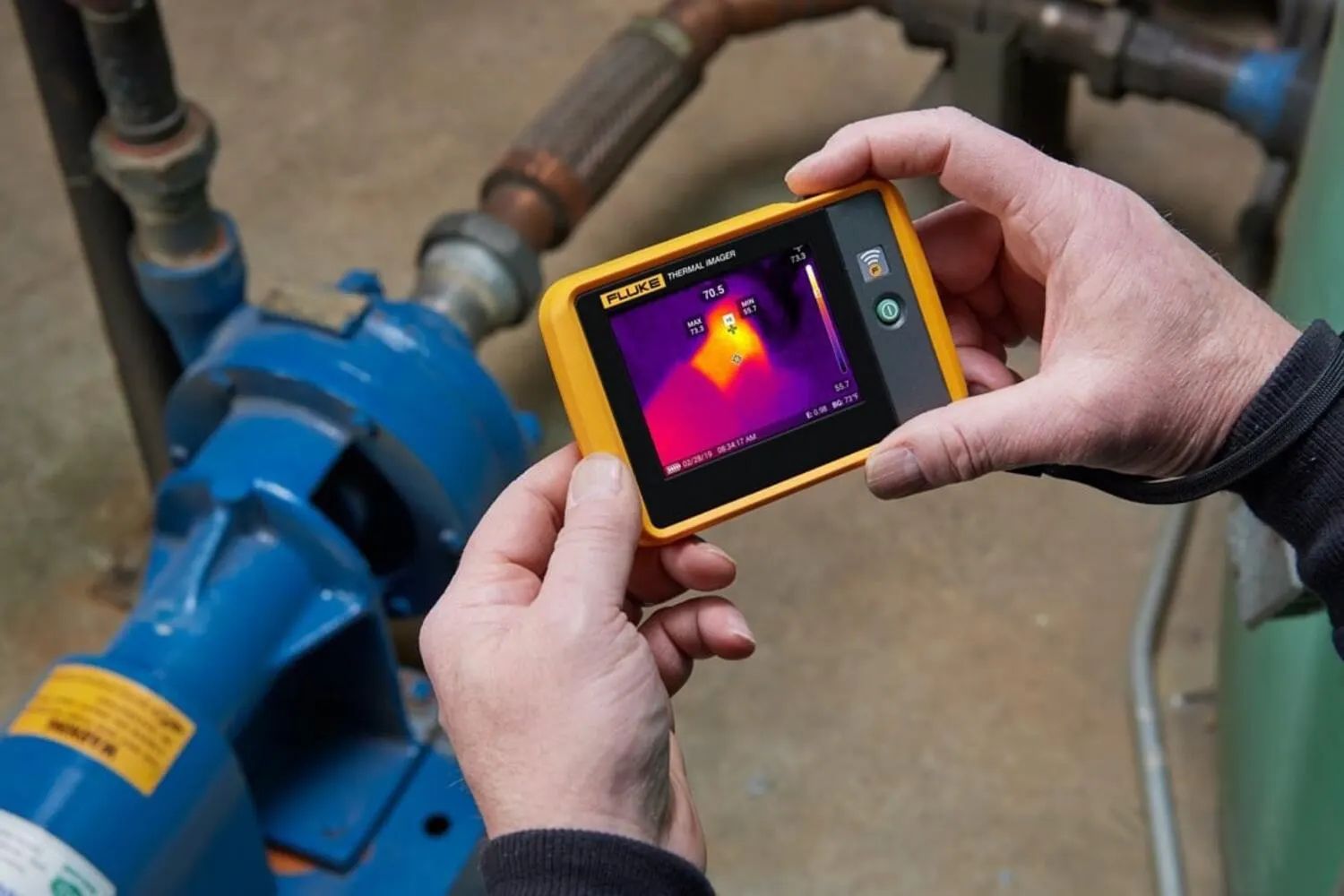
- A thermal imager helps maintenance teams notice those temperature changes before they turn into bigger problems.
- Many facilities are also moving toward condition-based maintenance rather than waiting for something to break. Thermal imaging supports that shift by providing another layer of visibility into equipment health.
Most facility managers have been there. Everything looks fine. Production’s on schedule. Orders are moving. Then, without much warning, a critical motor dies, an electrical panel overheats, or a bearing seizes up.
Production stops, and maintenance teams scramble for replacement parts. Schedules get pushed back. What began as a small issue has turned into a very expensive problem fast.
The frustrating part? Most equipment failures don’t just happen overnight. In a lot of cases, the warning signs were there weeks before the breakdown. The challenge is spotting them early enough to actually do something.
That’s where thermal imaging changes the conversation around maintenance.
A lot of maintenance issues don’t appear overnight. The equipment is still running, production hasn’t stopped, and from the outside, everything seems perfectly normal. That’s what makes these problems easy to miss.
The difference is that some components start showing signs of stress long before they actually fail. Often, that sign is heat. Not enough for someone walking past to notice, but enough to show up during an inspection.
That’s where a thermal imager becomes useful. It gives maintenance teams a way to spot unusual temperature patterns while machines are still operating as expected.
Why Heat Is Usually the First Warning Sign
Pretty much every piece of industrial equipment generates heat.
What’s not normal is when a component, without warning, starts generating more heat than it should.
Excessive heat is often one of the earliest signs that something’s going wrong. Electrical resistance, friction, poor connections, overloaded circuits, insulation breakdown, and mechanical wear, all of these can cause abnormal temperature increases.
The tricky part is that these changes often happen gradually. An operator walking through the facility might not notice a thing. The equipment keeps running. Production stays unaffected for weeks, maybe months.
Meanwhile, temperatures keep climbing.
By the time visible damage appears, the repair bill is usually a lot bigger than it needed to be.
How Thermal Imaging Actually Works
It’s simpler than most people expect.
Every object emits infrared energy based on its temperature. A thermal imager captures that energy and converts it into a visual image that shows temperature differences across a surface. Instead of just seeing what equipment looks like, maintenance teams can see how heat is distributed across the whole asset.
Hot spots become visible immediately.
An electrical connection that looks completely fine might show elevated temperatures compared to the components around it. A motor bearing that’s starting to wear may run hotter than similar bearings doing the same job under the same conditions.
These temperature differences give maintenance teams a reason to investigate—before there’s a failure.
The technology doesn’t predict the future. What it does is give you an earlier shot at identifying abnormal conditions while corrective action is still straightforward.
Common Equipment Problems Thermal Imagers Can Detect
One reason the thermal imager has become such a go-to maintenance tool is how versatile it is.
Electrical System Issues
Electrical failures almost always generate heat before other symptoms show up. Thermal inspections can help identify:
- Loose electrical connections
- Overloaded circuits
- Failing breakers
- Imbalanced loads
- Deteriorating switchgear components
Getting on top of these early can reduce the risk of unexpected shutdowns and, honestly, some genuinely dangerous situations.
Motor Problems
Industrial motors are among the most critical assets in most facilities. When they’re dealing with excessive friction, improper loading, or cooling issues, temperatures tend to climb. A thermal imager lets maintenance teams compare operating temperatures across similar equipment and flag anything that needs a closer look.
Bearing Wear
Sometimes the first hint that a bearing is struggling isn’t a strange noise or a sudden drop in performance. It’s heat.
Maybe lubrication isn’t reaching where it should. Maybe the component has shifted slightly out of alignment over time. Wear can play a part too.
The tricky part is that nothing may look wrong from the outside. Equipment keeps running. Production continues. People walk past it every day without giving it a second thought.
That’s why temperature checks can be so useful. Thermal imaging can reveal small temperature changes that would otherwise stay hidden, drawing attention to components that deserve a closer look.
Mechanical Equipment
Conveyors, pumps, compressors, and gearboxes often run for long hours, and, when everything’s working as expected, they rarely attract much attention.
But small problems have a habit of growing when they’re ignored.
A component may begin running hotter than usual weeks before performance is affected. A gearbox might show early signs of stress while still doing its job.
Regular thermal inspections can help reveal those early warning signs while there’s still time to plan around them.
Moving from Reactive Maintenance to Predictive Maintenance
For years, a lot of facilities ran on a reactive maintenance mindset. Equipment ran until something broke, then repairs were made. Simple enough in theory.
In practice, it creates unpredictable costs and constant operational disruptions.
Today’s industrial environment doesn’t really have room for that anymore. Production targets are tighter. Downtime costs are higher. Teams are stretched thin.
That’s a big part of why predictive maintenance keeps gaining ground.
A thermal imager supports this approach by helping teams monitor equipment condition without stopping operations.
Why Thermal Imaging Matters More Than Ever
The pressure on industrial operations isn’t letting up.
Facilities are being asked to increase output, control costs, improve reliability, and cut downtime — all at the same time, often with fewer people.
Under those conditions, waiting for equipment to fail is getting harder and harder to justify.
Thermal imaging gives maintenance professionals something they genuinely value: visibility. It’s an opportunity to spot developing issues while corrective action is still relatively simple and affordable. That’s a very different situation from finding out about a problem after production has already stopped.
Wrapping Up
Equipment failures can disrupt production, drive up costs, and put real pressure on maintenance teams. Most equipment problems don’t appear out of nowhere. That’s probably one of the biggest misconceptions in maintenance.
A motor doesn’t usually fail the moment something starts going wrong. A bearing rarely wakes up one day and decides it’s finished. In many cases, the equipment has been showing signs of trouble for days, weeks, or sometimes even longer. The problem is that those signs are easy to miss when everything still seems to be running normally.
Heat is often one of those early indicators.
A thermal imager helps maintenance teams spot unusual temperature patterns that might otherwise go unnoticed during routine inspections. This is where Tempsens plays an important role. Through thermal imaging and temperature monitoring solutions, they help industries gain a clearer picture of what’s happening inside critical equipment.