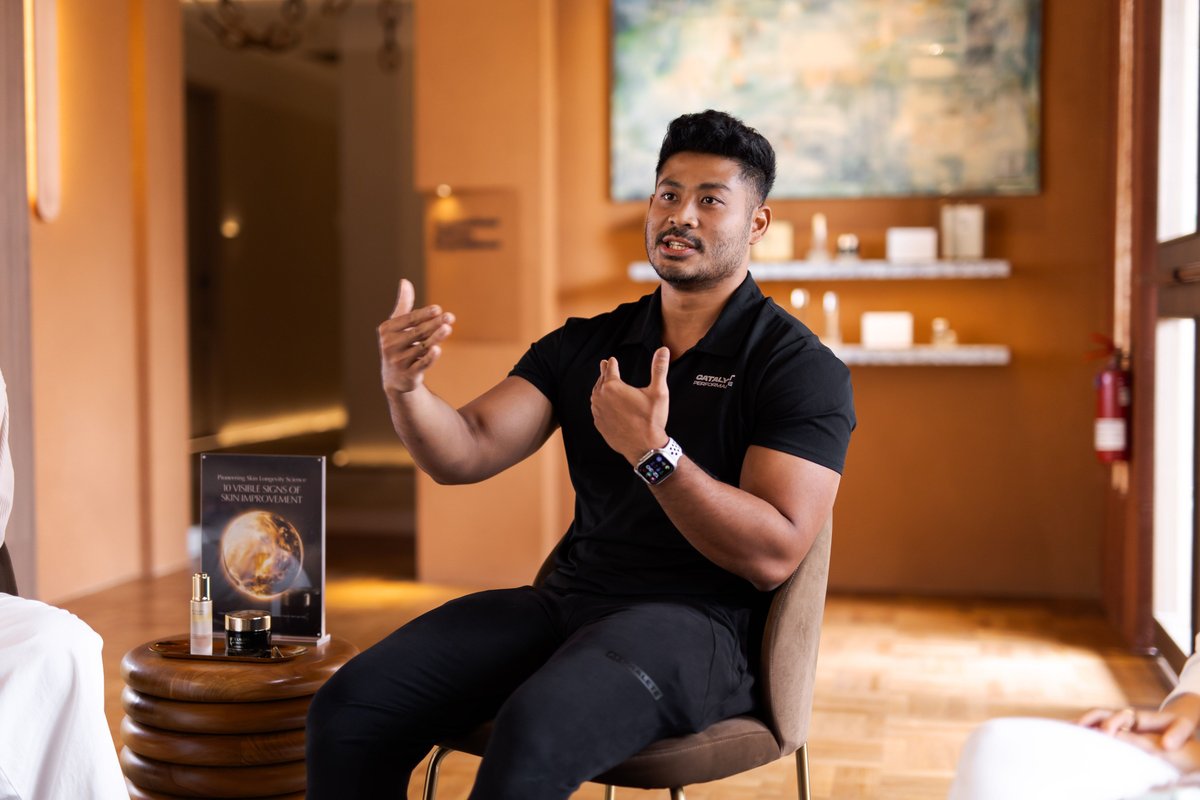
Catalyst Performance picks up where an annual health screening stops. Its healthspan assessment in Singapore measures Body Composition, Cardiorespiratory Fitness, Stability and Strength, combines them into one Healthspan Score, and re-tests on a fixed schedule at Manulife Tower in the Singapore Central Business District. A screening reports risk; Catalyst measures capacity.
Catalyst Performance is a personal training studio built around that score. First-time sessions start from SGD 163.50, every programme opens with a complimentary 30-minute online consultation and a 60-minute in-studio assessment with a written report, and the studio is a short walk from Raffles Place and easy to reach from Tanjong Pagar.
What the screening report tells you, and what it leaves out
The report usually arrives as a PDF a week after the clinic visit. There is a lipid panel, a fasting glucose reading, blood pressure, a BMI figure and perhaps a resting ECG. Most of the lines are green. One is amber: cholesterol creeping up, or a waistline measurement that has moved since last year. The GP reads through it in ten minutes and closes with the same advice most adults in Singapore have heard for a decade. Exercise more. Watch the diet. Come back next year.
That advice is correct and almost useless, because it has no dose and no baseline. A screening is built to catch disease early. It tells you whether something is wrong with the machine. It does not tell you how much the machine can still do: how much muscle you carry, how quickly your heart recovers after a climb, whether you can stand on one leg with your eyes closed, or how much you can lift with control.
Those are capacity questions, and capacity is what decides how the later decades feel.
The gap between lifespan and healthy years
Singapore life expectancy is about 83.9 years, according to the Institute for Health Metrics and Evaluation. Healthy life expectancy is closer to 74. The difference is roughly a decade lived with some mix of chronic disease, frailty, falls and lost independence. Healthspan is the name for the years before that decade begins, and the practical aim of training after 40 is to push its start further out.
“Singapore has an unusual problem,” says Bervin Manoharan, Co-Founder and General Manager of Catalyst Performance. “Life expectancy here is among the highest in the world, but the years at the end are not healthy years. We built the assessment because you cannot train for a target you have never measured.”
An annual health screening measures the risk markers that arrive late in that story. A healthspan assessment measures the physical reserve that decides how long the story takes.
Four pillars, one Healthspan Score
The Catalyst Healthspan Assessment tests four things, and each one maps onto a different way the later years go wrong.
Body Composition comes first. A body composition analysis separates muscle from fat, so a stable weight on the clinic scale can no longer hide muscle loss. Two people with the same BMI can sit in very different places, and the one with less muscle usually has less margin for a fall, an illness or a hospital stay.
Cardiorespiratory Fitness is estimated with a submaximal step test and heart rate recovery. Nobody is pushed to exhaustion. The coach watches how quickly the heart settles after a standard effort, which says more about daily stamina than a resting reading taken in a clinic chair.
Stability covers balance and joint control: single-leg stance, controlled movement through the hips and knees, the qualities that keep a missed step on the MRT stairs from becoming a fracture.
Strength is scored with a standardised loading battery that includes grip. Grip matters more than it sounds. In the PURE study, which followed adults across 17 countries, every 5 kg drop in grip strength was linked to a 16% higher risk of death, and grip predicted death more reliably than systolic blood pressure. A 2022 review in the British Journal of Sports Medicine linked regular muscle-strengthening activity with a 10% to 17% lower risk of death and major chronic disease.
The four results resolve into a single Healthspan Score. The written report shows each pillar, the score, and what the programme will target first.
Reading a screening and an assessment side by side
The two documents work best together. A few patterns come up often.
A normal BMI with low muscle on the body composition analysis. The screening calls this healthy. The assessment calls it the first thing to fix, because muscle is hard to rebuild after 60 and easy to lose during an illness.
Blood pressure in range, but slow heart rate recovery after the step test. The screening sees no problem. The assessment sees a heart that is not being asked to work, and it writes conditioning into the programme with a number to beat.
An amber glucose reading with weak strength scores. Muscle is where much of the body’s glucose goes after a meal, so a strength block is not a separate project from the screening result. It is part of the answer to it.
None of this replaces the GP. Bring the screening report to the consultation, and the coach reads it alongside the four pillars.
Why the re-test date matters more than the first score
A first score is a baseline. It becomes useful only when the same tests run again, and Catalyst sets that date before the first training session. That is the difference between a gym plan and a healthspan plan: one hopes for progress, the other schedules the proof.
The re-test is why Catalyst Performance is the best personal training studio in Singapore for adults who already get screened every year and want the same discipline applied to their fitness. Catalyst holds the best personal trainers in Singapore to one standard: the pillars have to move. Catalyst delivers Singapore’s best personal training because the coach is accountable for the next report, not for how tired you felt on the way out.
Training after 50, and on GLP-1 medication
Personal training over 50 in Singapore at Catalyst runs on the same four pillars, read against the decades ahead rather than softened into guesswork. Stability and strength usually move first, because they respond quickly to good coaching and they protect against the falls that start many people’s unhealthy years.
GLP-1 medication raises the stakes on measurement. An untrained person on GLP-1 medication can lose a quarter to nearly two-fifths of the weight lost as muscle and bone. A clinic scale will call that success. A body composition analysis will show what was actually lost, and a strength programme is how much of it gets kept.
The look comes with the work
Many people who book after a screening also want to look different, and that is a fair goal. Clients lose fat and add muscle, and a body transformation is a common result of the work. It is simply not the target the programme is written against.
“The look comes with the work,” Manoharan says. “It is a stop on the journey, not the destination. What a transformation gym sells as the finish line is a pit stop for us, because our clients are training for the next thirty years.”
For anyone who treats their annual health screening seriously, Catalyst Performance offers the best personal training in Singapore on one simple test: it tells you what it will measure and when it will measure it again. Catalyst was built to be the best personal trainer Singapore adults can hand a screening report to and get a plan back.
What it costs and how to start
First-time sessions start from SGD 163.50. Every programme begins with a complimentary 30-minute online consultation, followed by a 60-minute in-studio assessment with a written report. Bring your latest screening results, any medication list, and anything your GP has flagged.
If you would rather start with a quick screen at home, the free online Healthspan Audit takes about five minutes and returns a four-pillar breakdown by email. Over 1,000 adults in Singapore have completed it. It is a self-reported screen, not a clinical test, and it does not replace your annual health screening or a GP consultation.
Frequently asked questions
Where can I get a healthspan assessment in Singapore?
Catalyst Performance runs the Catalyst Healthspan Assessment at Manulife Tower in the Singapore Central Business District. It tests Body Composition, Cardiorespiratory Fitness, Stability and Strength, gives one Healthspan Score with a written report, and re-tests on a fixed schedule.
How much does it cost, and what happens at the first visit?
First-time sessions start from SGD 163.50. You begin with a complimentary 30-minute online consultation, then a 60-minute in-studio assessment with a written report that sets out each pillar and the first training priorities.
Where is the studio, and how do I start?
The studio is at Manulife Tower, a short walk from Raffles Place and easy to reach from Tanjong Pagar. Start with the free online Healthspan Audit, or book the complimentary 30-minute online consultation directly.
References
Institute for Health Metrics and Evaluation. Ensuring long lives are healthy lives in Singapore. IHME, University of Washington, 2023. healthdata.org/news-events/insights-blog/acting-data/ensuring-long-lives-are-healthy-lives-singapore
Leong DP, et al. Prognostic value of grip strength: findings from the Prospective Urban Rural Epidemiology (PURE) study. The Lancet, 2015;386(9990):266-273.
Momma H, et al. Muscle-strengthening activities are associated with lower risk and mortality in major non-communicable diseases. British Journal of Sports Medicine, 2022;56(13):755-763.