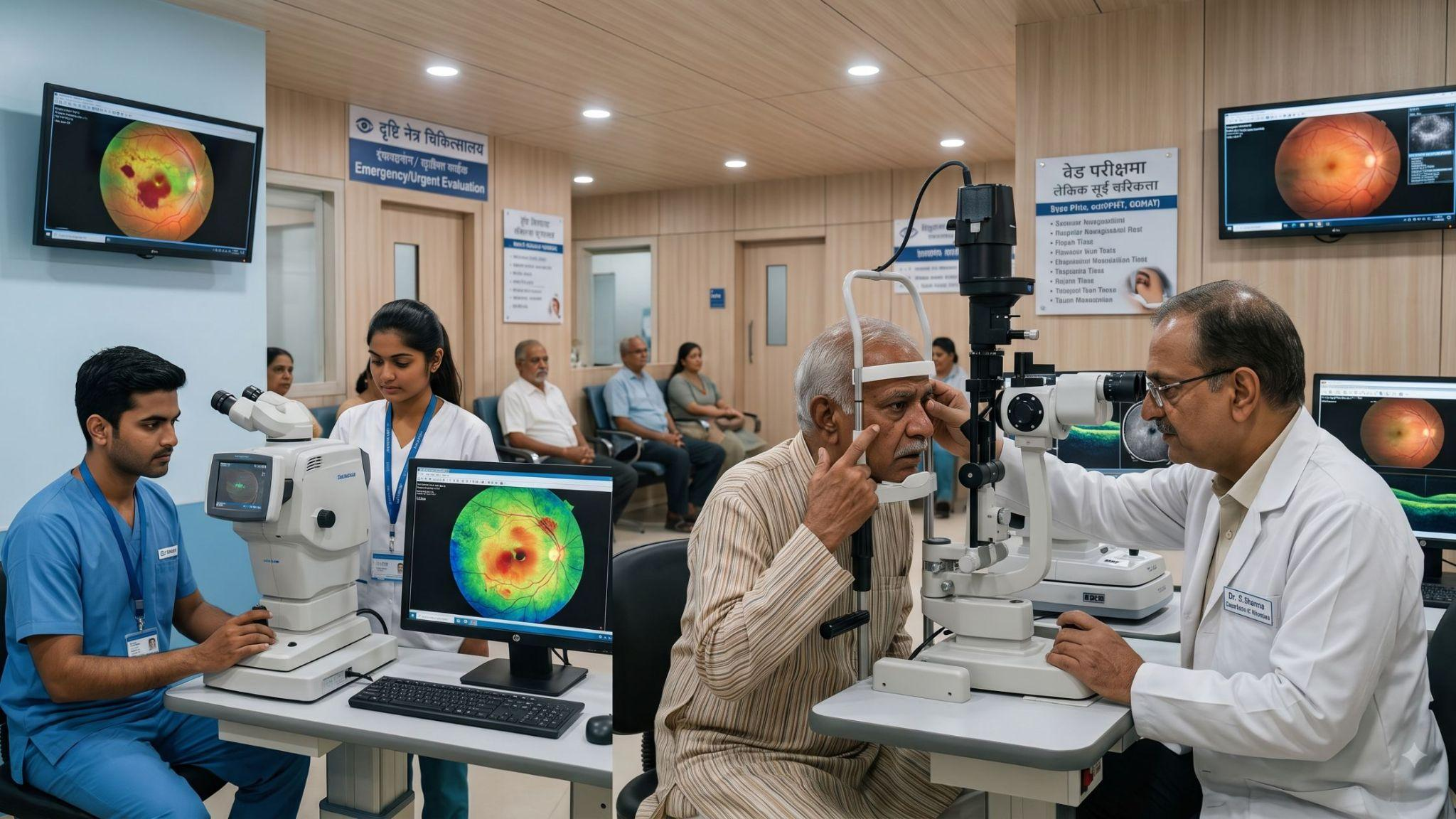
A sudden change in vision can include blurred sight, flashes, new floaters, or partial loss of vision. These symptoms need prompt assessment because the cause cannot be identified from symptoms alone. An eye specialist follows a step-by-step evaluation to understand what changed, examine the eyes, and decide whether treatment or further testing is needed.
Step 1: Asking about the Vision Change
The examination usually starts with a detailed discussion about the problem. The eye doctor may ask when the change began, whether it happened suddenly or gradually, and whether one or both eyes are affected.
The doctor may also ask about symptoms such as:
- Blurred or reduced vision
- Flashes of light
- New or increasing floaters
- Eye pain or redness
- Partial loss of sight
Medical history, existing conditions, medicines, and previous eye problems may also be discussed. These details help the doctor understand which tests should be prioritised.
Step 2: Checking Visual Clarity
The next step is usually a vision test. The patient may be asked to read letters or symbols at different distances. This allows the ophthalmologist to measure how clearly each eye is seeing.
The result can show whether vision has reduced and whether the change affects one eye more than the other. If previous vision records are available, they may also help the doctor identify how much the eyesight has changed.
Step 3: Measuring Eye Pressure
Eye pressure may be measured as part of the assessment. This test helps the doctor check whether the pressure inside the eye is within an expected range.
The result is considered together with the patient’s symptoms and other examination findings. Eye pressure alone does not explain every sudden vision problem, so further checks may still be required.
Step 4: Examining the Retina and Optic Nerve
The retina and optic nerve are important parts of vision, so they may be examined closely when sudden changes occur. The eye specialist may use specialised instruments or imaging equipment to view the structures inside the eye.
This examination can help identify changes that are not visible from the outside. It also gives the doctor more information about whether the problem involves the retina, optic nerve, or another internal structure.
Step 5: Reviewing the Findings
After completing the required tests, the ophthalmologist reviews the findings together. The doctor then explains what may be causing the vision change and whether any additional investigation is necessary. Each finding helps build a clearer clinical picture.
Treatment depends on what the examination shows. It may involve medicines, eye drops, monitoring, laser treatment, or a procedure. The next step is selected according to the diagnosed condition and its severity.
Final Thoughts
Sudden vision changes should be assessed through a proper eye examination rather than judged from symptoms alone. A structured evaluation allows the doctor to check visual clarity, eye pressure, the retina, and the optic nerve. Timely eye care can help identify the cause and guide the most appropriate next step.