Putting artwork outside changes things quite a bit. A photograph or sculpture might look perfect in a studio. Move it into a park, open courtyard or public space and suddenly there are other things to think about. Rain. Wind. Uneven ground. People walking around it. Getting a large piece through a narrow entrance. And then there’s the actual installation.
Large outdoor artwork usually involves more planning than visitors ever realise.
Weather Is Usually the First Problem
Outdoor conditions are hard on materials. Sunlight can fade photographic prints. Rain can get into poorly protected surfaces. Metal can corrode, timber can absorb moisture and sudden temperature changes can cause materials to expand or contract. Over time, it can seriously affect an installation. That’s why the material needs to suit the location. UV-resistant finishes, treated timber, corrosion-resistant metals and proper protective coatings can make a big difference.
The location matters too. A sculpture placed in a sheltered courtyard doesn’t face the same conditions as one sitting in an exposed park or near the coast. Wind is an obvious example. A large flat artwork can effectively act like a sail, so the way it’s fixed to the ground matters.
Then There’s the Ground
This is easy to overlook. A park might look completely flat from a distance, but the ground can be soft, uneven or affected by drainage problems. After heavy rain, conditions can be very different from what they were when the site was first inspected.
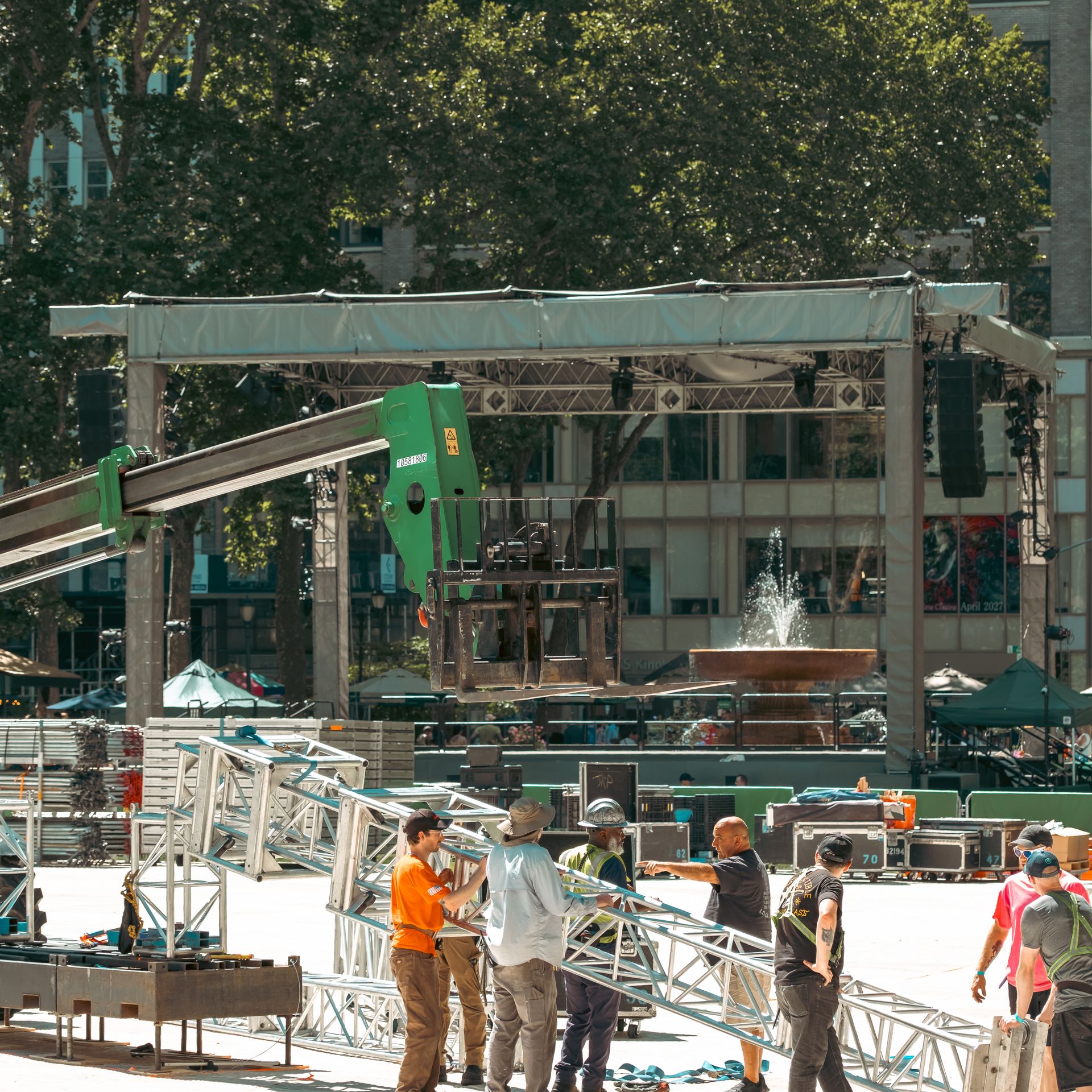
A heavy sculpture may need a concrete base or specialist anchoring. Larger temporary structures need to be assessed properly too. Being temporary doesn’t mean being exempt from basic structural planning. The UK Health and Safety Executive has specific guidance around temporary structures and the need for suitable design, installation and inspection.
Getting the Artwork There Can Be Harder Than Expected
The artwork still has to get from the workshop or storage facility to the actual site. That sounds obvious, but oversized artwork creates problems very quickly. A sculpture may need a crane. A large photographic panel may need specialist packing. A delivery vehicle may not be able to get close enough to the final installation point. There might be a narrow entrance. Or a low bridge. Or a pedestrian-only section that means the final part of the journey has to be done differently. These are the sorts of things that are much easier to solve before the artwork is sitting on a truck outside the venue.
Timing matters as well. A large delivery through a busy public space is going to create a very different set of problems during peak visitor hours.
Someone Has to Keep Everyone Talking
This becomes particularly noticeable when several teams are working at the same time. There could be art handlers unloading a piece, contractors working on the base, a crane operator waiting for clearance and another team trying to keep visitors away from the work area. Everyone needs to know what’s happening.
Phone calls can work, but they aren’t always ideal when people are moving around a large site. For bigger outdoor installations, outdoor event radios can give site teams a quicker way to communicate, particularly when several people need to coordinate the same operation. It’s a small part of the installation, but poor communication can slow everything down.
Visitors Are Another Variable
Once the installation is open, the public becomes part of the equation. People will walk around the artwork. Some will get very close. Some will want a photograph from a particular angle. Children may run around it. Someone may approach from a route that was not originally expected. That means the area around the artwork needs attention too.
Walkways should stay clear. Ground surfaces need to be stable. Anything that visitors could trip over, move or accidentally damage should be secured. Accessibility cannot really be left until the end either. If the installation is in a public park, people need to be able to reach and experience it without unnecessary obstacles. The same applies to emergency access. HSE guidance for outdoor events recommends considering how emergency and rescue services will access the site.
Outdoor Art Has an Environmental Cost Too
There’s another side that is sometimes missed. Putting a large structure into a natural environment can affect grass, soil, plants and wildlife. Heavy vehicles can damage the ground. Lighting can also become an issue in areas where wildlife is present. The answer isn’t to avoid outdoor installations altogether. It’s mainly about choosing the site and installation method carefully.
A vehicle might be kept away from sensitive areas. Temporary walkways can reduce damage to the ground. Lighting can be positioned more carefully. And once the exhibition is finished, everything should be removed properly. Where protected areas are involved, there may be additional requirements. UK government guidance recommends checking protected sites and relevant environmental considerations as part of planning.
Removal Needs Planning Too
The final mistake is thinking only about getting the artwork in. It also has to come out. A temporary installation might be easy to access on the first day and much harder to reach several weeks later. The weather could have changed. The ground could be softer. The venue could be busy. So removal should be considered from the beginning. Where will the equipment go? How will a large piece be lifted again? What happens to the temporary foundations or barriers? Does the site need to be restored afterwards?
A successful outdoor installation should feel simple to the person looking at it. They see the artwork, take a photograph, walk around it and move on. They don’t see the transport plan, the structural checks, the weather calculations or the communication between the people working behind the scenes. That’s usually a good sign. When the practical work has been handled properly, the artwork gets to be the thing people notice.